Retired Colonel Michael Jones founded Pathways 2 Solutions, Inc., a full-service program management company that delivers innovation to government entities and provides effective, efficient solutions.
He recently attended a Regions-hosted fraud prevention event in Nashville for a different reason: to protect his business, brand and employees.
“We’re a typical small business. We have about 50 employees,” Jones said. “We support the federal government, state government and federal agencies that support our veterans and support our military.”
What Jones has seen over the last few years – the attempts at defrauding his company rise monthly. So, learning not only what to look out for, but how to educate his staff, is paramount.
“This is personal, it’s professional and it’s meaningful,” Jones added. “And we appreciate it.”
No business owner, executive or consumer is immune from fraud. As cybercriminals deploy increasingly sophisticated tactics, Regions Bank recently brought customers together in Nashville for a candid discussion on today’s biggest scam threats and the practical steps individuals and organizations can take to protect themselves.
You have one momentary lapse, one loss of focus, and that’s all the bad guys need to get you.
Chris Claybrook, Regions’ Market Executive for Nashville
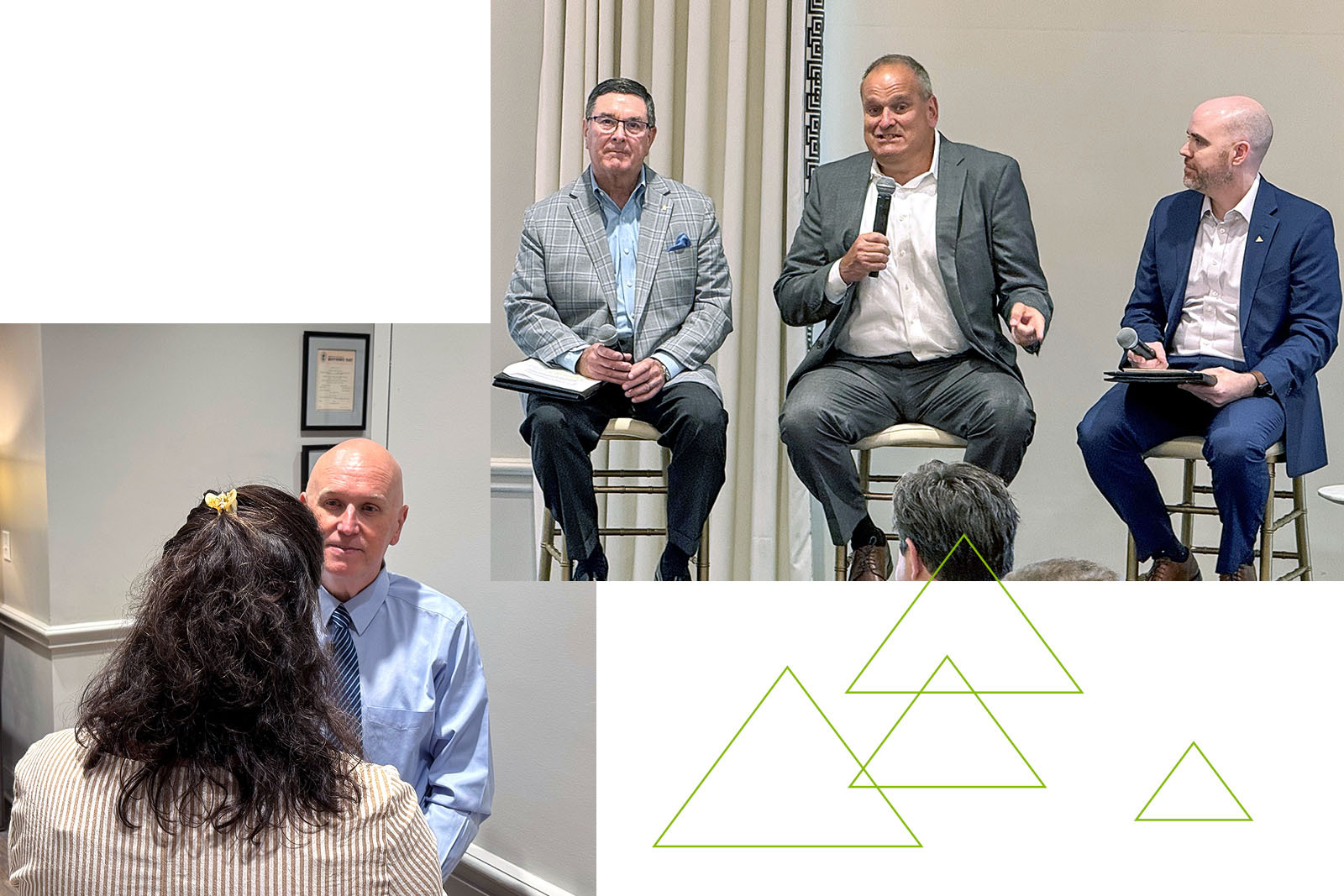
Held at Richland Country Club, the event featured an interactive, hour-long conversation on emerging fraud trends and practical prevention strategies.
Chris Claybrook, Regions’ Market Executive for Nashville, welcomed attendees and emphasized that fraud can happen unexpectedly, regardless of how prepared someone may feel.
“You have one momentary lapse, one loss of focus, and that’s all the bad guys need to get you,” Claybrook said before introducing the panelists.
Jeff Taylor, Senior vice president, Regions Corporate Banking Group; Scott Augenbaum, a former FBI special agent; and moderator Hunt Prothro, Regions’ Fraud Prevention manager, shared insights into the threats they see most often and the actions people can take to better protect themselves.
Because when it comes to fraud prevention, knowledge remains one of the most effective defenses.
“How much money do you really need to spend to have a cybersecurity mindset?” Augenbaum asked. “Really, you don’t have to spend any money. You just need to take the time and do the simple things.”
Plain Truths
The discussion began with a straightforward message: everyone is at risk.
“Cybercriminals don’t care who you are,” Augenbaum said. “They don’t care how much money you have. They want to target you and they want to target your family.”
The second reality is that scammers are often after much more than money. Personal information, credentials and identities can be just as valuable.
“The chances of law enforcement coming in with a magic wand and fixing the problem?” Augenbaum said. “Getting your money back is very difficult.”
Taylor added that today’s criminal organizations are highly sophisticated.
“They are extremely well educated and technologically astute,” he said.
Guarding the House
Prothro raised the topic of social engineering, a form of psychological manipulation that criminals use to gain trust and access sensitive information.
One of the most common entries is email.
Augenbaum recalled a recent case involving a client who lost a $1 million wire transfer to a fraudulent overseas recipient. Fortunately, $700,000 was recovered quickly.
“I asked him a simple question: Do you have two-factor authentication on your work email?” Augenbaum said. “And what do you think his answer was? ‘No.'”
He stressed that securing email accounts should be a top priority.
“So let’s get this out of the way. If you do not have two-factor authentication on your work or personal email, you’re going to be a victim of fraud.”
The same principle applies to mobile devices and home networks. Without multiple layers of protection, there is often little a bank, wireless carrier or law enforcement agency can do once an account has been compromised.
“If you have the capability, use biometrics on your phone,” Taylor added. “It’s much more difficult to replicate that information.”
What Is Business Email Compromise?
Business Email Compromise (BEC) remains one of the most effective fraud schemes facing businesses today.
“It’s the ability of a fraudster to leverage what we consider to be a secure platform,” Taylor said. “They’re then going to leverage that communications platform to try to convince someone to either make a change to an existing payment or create a new payment.”
The most common forms of BEC include executive impersonation, vendor impersonation and employee impersonation.
Taylor shared a hypothetical example involving a CEO traveling overseas to pursue a potential acquisition.
Meanwhile, the company’s treasurer receives an email appearing to come from the CEO stating the deal is moving forward and requesting a $1 million wire transfer as a down payment.
The request appears legitimate. But it’s fraudulent. In this scenario, criminals have compromised the executive’s communications and used that access to create a convincing payment request.
When the CEO returns and the fraud is uncovered, the money is gone.
Vendor and employee impersonation schemes often follow a similar pattern. Fraudsters create a sense of urgency and use seemingly legitimate requests to persuade victims to change payment instructions or send money.
Stop-Call-Confirm.
Taylor offered a simple strategy to combat payment fraud.
“We call ours stop, call and confirm,” he said. “If you receive a request for a payment or a change to an existing payment, stop your process, pick up the phone, call the requester at a number you know and confirm the request is legitimate.”

If you receive a request for a payment or a change to an existing payment, stop your process, pick up the phone, call the requester at a number you know and confirm the request is legitimate.
Jeff Taylor, Senior vice president, Regions Corporate Banking Group
At the same time, banks are constantly monitoring for unusual account activity.
“In the back end of our systems, we’re monitoring transactions for anomalous activity,” Prothro said. “If you’re somebody who sends a $100,000 wire every week and all of a sudden you send a $10 million wire, that’s an example in which our system might flag a payment and push it to our investigators to ask, ‘Is this normal activity or is it fraud?'”
Artificial Intelligence Changes the Game
The rapid adoption of artificial intelligence is creating new opportunities for criminals.
“Artificial intelligence isn’t making cybercriminals smarter,” Augenbaum said. “It’s simply giving them the tools they need to do their job.”
Those tools can be used to create convincing phishing emails, spoofed phone calls and realistic deepfakes built from publicly available photos, videos and voice recordings.
As a result, fraud attempts are becoming more believable and more difficult to detect.
Elder Fraud
Long before generative AI emerged, Augenbaum encountered a scam that remains common today: the grandparent scam.
“You get a call, ‘Grandpa, I’m in trouble. Don’t call Mom,'” Augenbaum explained. “The young man said he was in jail and, ‘If you don’t send $4,500, I’m going under the jail.'”
The scam succeeds because it immediately triggers an emotional response.
Whether it’s a grandchild in distress, a romantic partner seeking help or a caller demanding immediate payment to resolve a problem, fraudsters often rely on the same tactic: urgency.
Criminals frequently coach victims through every step of the process.
“They’re going into the bank with instructions on what they should do,” Augenbaum said.
Taylor added that some victims arrive at a branch wearing headphones and receiving real-time directions from the scammer.
At Regions, associates are trained to recognize signs of distress and identify situations that warrant additional questions.
Have a Response Plan
“Ninety percent of bad things easily could be prevented, but you have to be proactive,” Augenbaum said. “So, if I had one minute, what would I tell you to do?”
His first recommendation: freeze your credit to help prevent unauthorized accounts from being opened in your name.
Second, identify your mission-critical accounts, including email accounts, mobile phone accounts and internet service provider accounts, and protect them with multifactor authentication.
“Billions of usernames and passwords are on the dark web,” he said. “Bad guys are going to get access to all of that.”
Strong authentication measures can provide a critical layer of protection.
For businesses, Taylor said preparation is equally important.
“Guard your house,” he said. “Make sure you’re working with your information technology team, that your systems and devices are up to date, and that your firewall protections are regularly updated and patched. And have consistent employee training.”
For families, he suggested creating a safe word that loved ones can use to verify urgent requests.
“So when you get that phone call from someone posing as your grandson, ask for the safe word,” Taylor said. “If they can’t provide the safe word, then you know the call is fraudulent.”
Most importantly, organizations should think through their response before a crisis occurs.
“Have a response plan,” Taylor said. “You’ve got to know what you’re going to do before fraud happens. Know who’s going to talk to the media. Talk your response through with your attorney. Report it to ic3.gov. Call your bank and make sure we understand what’s going on.”
A Shared Responsibility
Frank Schriner, Private Wealth leader for Regions in Metro Nashville, closed the event by thanking attendees for taking a proactive approach to fraud prevention.
“We have a shared responsibility among all of us,” Schriner said. “We’ve really got to pull together and do everything we can to help each other.”
He encouraged attendees to take the lessons learned back to their families, friends, colleagues and employees.
“Take what you’ve picked up today back to your family, friends, colleagues and employees and share this information,” Schriner said.
“The more we share information, the better chance we have to keep fraudsters from succeeding.”
As the discussion demonstrated, effective fraud prevention is not just about technology. It’s about awareness, preparation and taking the time to verify before acting. In a world of increasingly sophisticated scams, those simple habits can make all the difference.
Additional Resources from Regions.com
Related Articles from Doing More Today
The information presented is general in nature and should not be considered, legal, accounting or tax advice. Regions reminds its customers that they should be vigilant about fraud and security and that they are responsible for taking action to protect their computer systems. Fraud prevention requires a continuous review of your policies and practices, as the threat evolves daily. There is no guarantee that all fraudulent transactions will be prevented or that related financial losses will not occur. Visit regions.com/STOPFRAUD or speak with your Banker for further information on how you can help prevent fraud.