Every day, thousands of Regions Bank associates walk into branches, operations centers, and corporate offices ready to serve customers and communities. At the same time, Regions’ Corporate Real Estate teams are working behind the scenes to make these workplaces healthier and more efficient through phased building upgrades and enhancements.
With Earth Day approaching, Regions is showcasing how facility upgrades, energy‑efficient technology, and smart building systems are improving the places where associates work and in turn fostering a better environment.
Enhancing Associate Wellbeing Through Smarter Buildings
To support a safe, comfortable, and productive work environment, Regions is investing in smart building technologies designed to improve indoor environmental quality.
Key enhancements include:
- Indoor Air Quality (IAQ) monitoring: Real‑time sensors help maintain quality indoor air by tracking ventilation, humidity, CO2 and particulate levels. These data insights allow Facilities teams to respond quickly and ensure associates are working in well‑balanced indoor spaces.
- Needlepoint Bipolar Ionization: This technology, installed in many of Regions’ high‑traffic buildings, helps to reduce common allergens, pathogens, and other airborne particles resulting in cleaner, fresher indoor air for associates.
- Water‑leak detection systems: Smart detection sensors reduce risk and disruption by identifying potential leaks early. This technology protects facilities, reduces maintenance needs, and keeps workplaces running smoothly.
- Enhanced HVAC routines and upgraded filtration systems: Our maintenance schedules and advanced filters support indoor air quality and more consistent temperature control, helping to promote associate comfort and wellbeing.
“By investing in more efficient building systems, we’re creating spaces that support our associates today while contributing to a more sustainable future for the communities we serve.” Said Mike Branca, head of Corporate Services for Regions Bank.
By investing in more efficient building systems, we’re creating spaces that support our associates today while contributing to a more sustainable future for the communities we serve.

Driving Efficiency and Reducing Waste Through Facility Improvements
Regions continues to lower its operational greenhouse-gas emissions through making building operations more efficient.
The bank has already achieved a 38% reduction in Scope 1 and Scope 2 emissions from the 2019 baseline as of Dec. 31, 2024; progress supported by ongoing improvements across the real estate portfolio.
“We’re making measurable progress toward our environmental goal by modernizing our facilities and reducing energy use,” said Mary Wheeler, Senior Vice President and Assistant General Counsel for Regions Bank. “These improvements not only support Regions’ shared value commitments, they also help us run smarter, more efficient buildings for years to come.”
Additional details about the bank’s shared value approach and reporting are available here on regions.com.
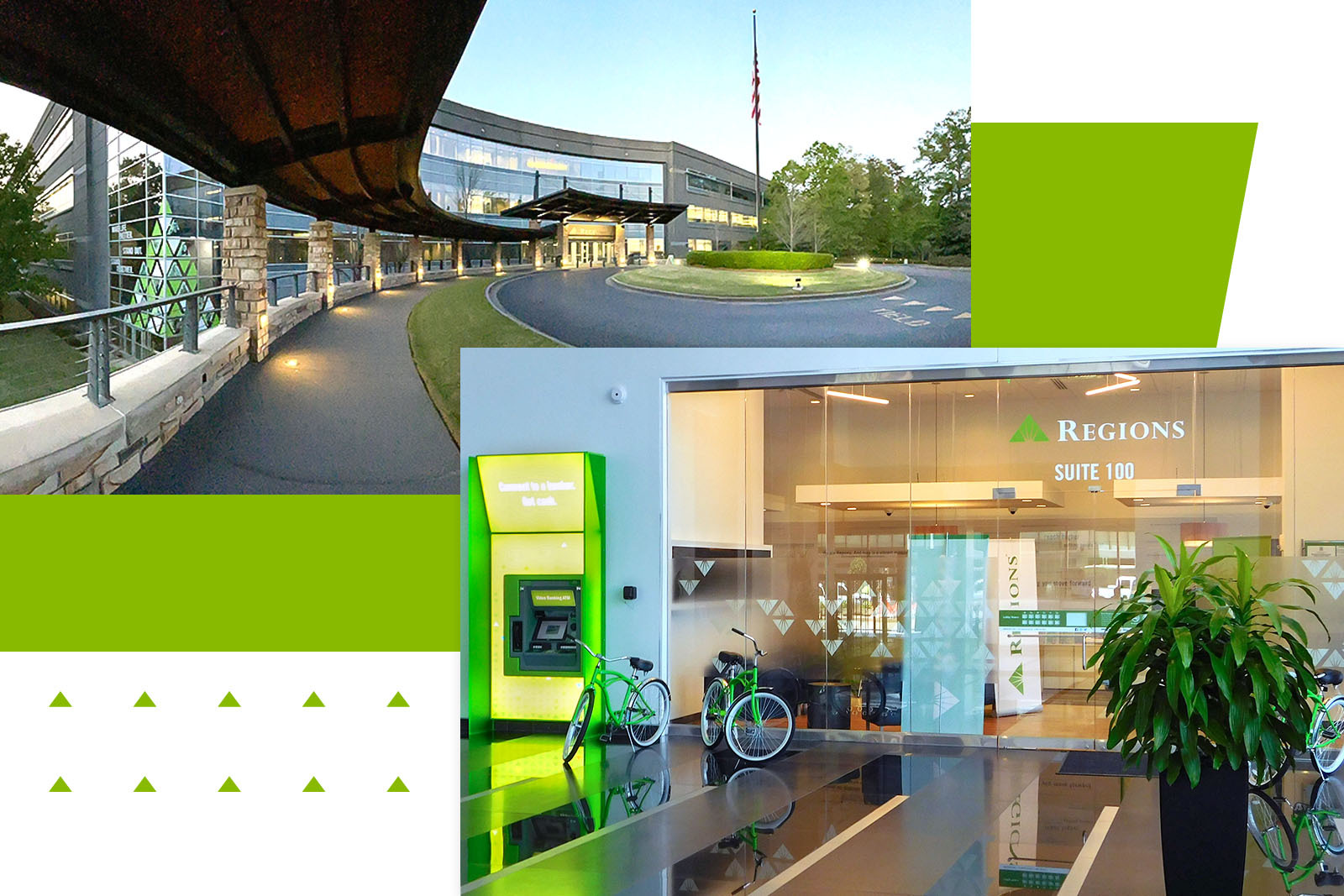
Recent environmentally friendly upgrades include:
- Energy‑efficient LED lighting and automated lighting controls to reduce energy consumption.
- ENERGY STAR®‑compliant window glazing that supports insulation and temperature regulation.
- High‑efficiency HVAC upgrades that reduce emissions and improve building performance.
- Recycled‑content ceiling tiles, carpet, and wall materials to minimize waste.
- Smart building systems and remote monitoring tools that optimize energy use across multiple locations.
Collectively, these upgrades help Regions operate more responsibly while supporting long‑term energy and cost savings.
These improvements not only support Regions’ shared value commitments, they also help us run smarter, more efficient buildings for years to come.

Small Changes That Make a Big Difference in Our Workplaces
In addition to major infrastructure upgrades, Regions is also making meaningful progress through simple, scalable improvements that add up over time.
Examples include:
- Remote‑controlled smart panels that automatically adjust lighting and HVAC in branches, reducing unnecessary energy use.
- Non‑VOC cleaning products that protect indoor air quality without increasing operational costs.
- Standardized drinking‑water solutions that support associate health.
As we recognize Earth Day, Regions remains focused on caring for associates, improving the work environment, and operating responsibly — one strategic improvement at a time.
Earth Day at Home; Smart, Simple Steps Anyone Can Take
You don’t have to be a large company to make a meaningful environmental impact. Greg Gammill, Senior Corporate Real Estate Facilities Partner for Regions Bank, says many of the same technologies used to manage large commercial spaces are now accessible and affordable for households as well. Small, practical upgrades at home can improve comfort, save money, and reduce environmental footprint.
Top tips include:
- Use water‑leak detection sensors
Wireless sensors placed near water heaters, washing machines, sinks, or basements can alert homeowners to leaks early — preventing costly damage while conserving water.
- Monitor indoor air quality
Consumer-grade air quality sensors track humidity, carbon dioxide, and particulate levels. These insights can help homeowners improve ventilation, maintain filters, and create healthier indoor environments.
- Switch to energy‑efficient lighting
LED bulbs use far less energy and last significantly longer than traditional lighting. Smart bulbs or automated lighting controls can further reduce power usage by eliminating unnecessary lighting.
- Choose ENERGY STAR®‑certified appliances
When replacing appliances, ENERGY STAR® models use less energy and water than standard options, helping lower utility bills while reducing environmental impact.
- Automate heating and cooling
Smart thermostats allow homeowners to adjust temperatures based on schedules or occupancy, improving comfort while avoiding wasted energy.
“The technology that supports healthier, more efficient buildings is increasingly available for home use,” Gammill noted. “Making even a few of these changes can add up over time, for your household and for the planet.”