When Markeila Cleveland arrived for the inaugural Regions Bank High School Experiential Learning Program, she was open about what she knew about banking.
“My knowledge of banking, honestly, right now is nothing,” she said.
The Regions Bank High School Experiential Learning Program is a weeklong career exploration program that introduces students to careers in banking, technology, marketing, fraud prevention and corporate operations while providing financial literacy and professional development training.
At the conclusion of the week, Cleveland, a senior at Jackson-Olin High School in Birmingham, Alabama, walked away with a different perspective.
“It’s changed by a lot, actually,” Cleveland said after the five-day program came to an end. “I’ve learned stuff that is truly going to help me out in the long run.”
That transformation was exactly what Regions hoped to inspire through the weeklong pilot program, which brought 17 high school students from Birmingham City Schools to the Regions Bank headquarters in Birmingham for a week of learning and career exploration. The program is part of Regions’ broader efforts to support workforce development and career readiness for students.
The students spent the week engaging with associates from across Regions, learning about careers in retail banking and fraud prevention to marketing, technology, digital solutions and data. Along the way, they participated in networking sessions, leadership development activities and financial literacy exercises designed to prepare them for life after high school.
“I hope this week that the students learn that there are so many opportunities that we have within Regions Bank,” said Taleisha Ming, Inclusion, Belonging and Impact Program Manager who helped oversee the program. “Typically, when you engage with people, they’re like, ‘What branch do you work at?’ This gives them an opportunity to see that, yes, we have our branches, we have our bankers, which are fantastic opportunities, but we also have so much more to offer as well.”
The program itself was created by Danielle Turner, a returning Regions intern who spent part of her internship during summer 2025 developing the concept.
“Last summer, my project was to draft something for students to come to our organization and learn a little bit about banking,” Turner said.
Drawing inspiration from Career Technical Education pathways she observed through meetings with educators, Turner designed the experience to expose students to a variety of career options and help them connect classroom experiences to real-world opportunities.
“With that, I designed the program to follow the pathways,” Turner said. “So, it’s a one-week experience for students to come to the bank, learn a little bit about the careers that are available here and hear people’s stories. But also, career development, the soft skills that people are looking for.”
So, it’s a one-week experience for students to come to the bank, learn a little bit about the careers that are available here and hear people’s stories. But also, career development, the soft skills that people are looking for.
Danielle Turner
For many students, the experience offered their first look at the breadth of banking careers available across Regions.
Morgan Womack, a rising senior at Ramsay High School, entered the program hoping to expand her horizons.
“Banking? I don’t know much about it,” Womack said at the beginning of the week. “But I’m hoping this opportunity will shed some light on some things I would need to learn to be an adult and growing into the person I would like to be.”
Womack was one of several students who arrived with limited exposure to the banking industry but an eagerness to learn more.
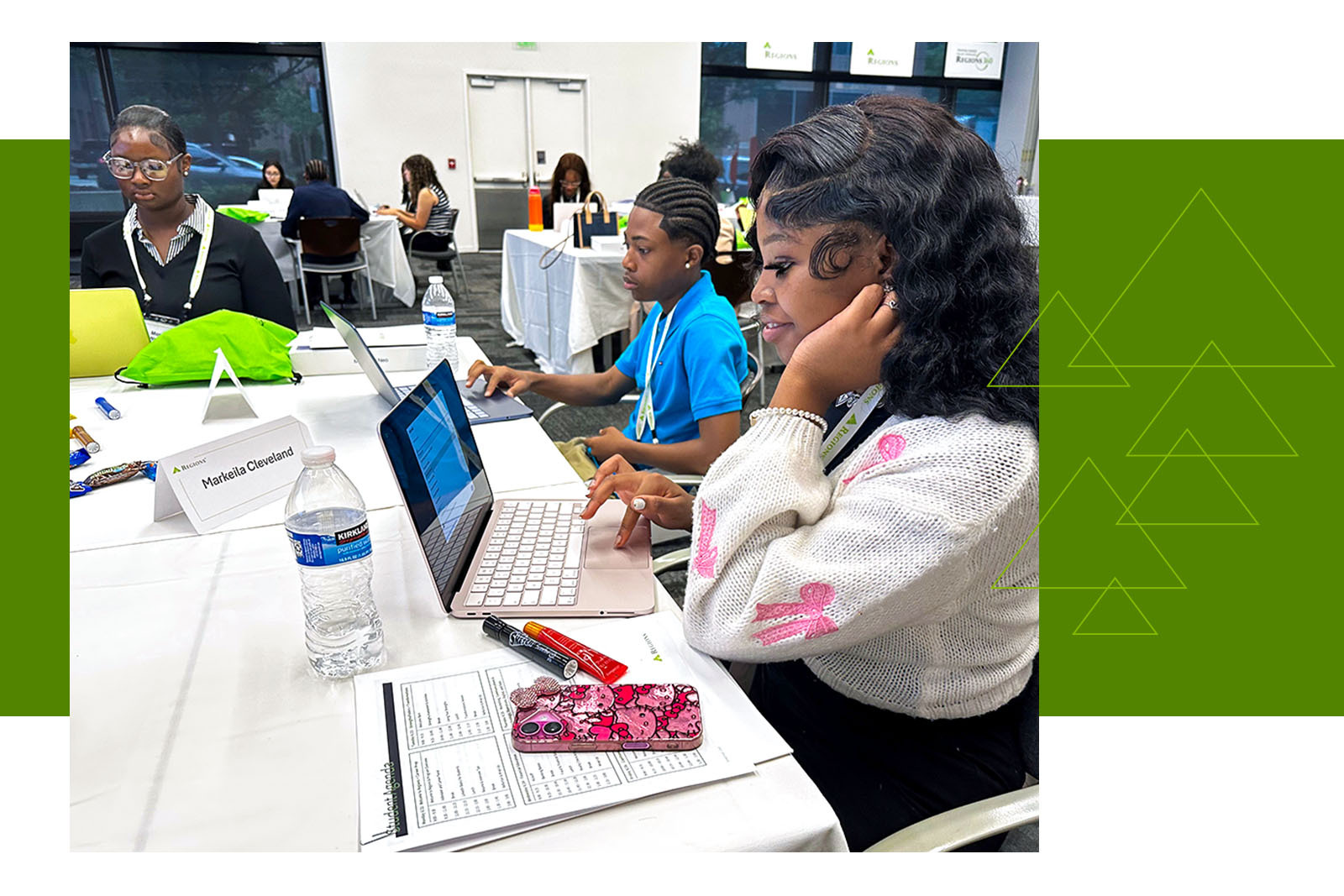
For Cleveland, one of the week’s most memorable experiences was a financial literacy exercise called Reality Check, where students navigated real-life budgeting scenarios and unexpected financial challenges.
“Everybody had bills to pay, stuff to do. Had to get another job. Had to roll the dice for challenges,” Cleveland said. “It was a fun activity.”
And the lesson resonated.
“Budgeting is a lot more than just saving money,” she said. “You really have to put your effort into it.”
Beyond financial literacy, students also gained professional skills they can carry into college or future careers. Activities included networking, LinkedIn profile development and professional headshots.
Turner hopes those experiences help students recognize possibilities they may not have previously considered.
“I want them to take away the vast opportunities that are available to them,” Turner said. “So even if you’re on one track, it doesn’t have to look like an office in a tech company or something of that sort. It might be available here as well.”
For Cleveland, the week served as both an opportunity and an eye-opening experience.
“It gave me a wake up,” she said. “It’s like, get up, girl. This is real. You need to start budgeting. You need to start prioritizing. You need to start getting yourself together right now.”
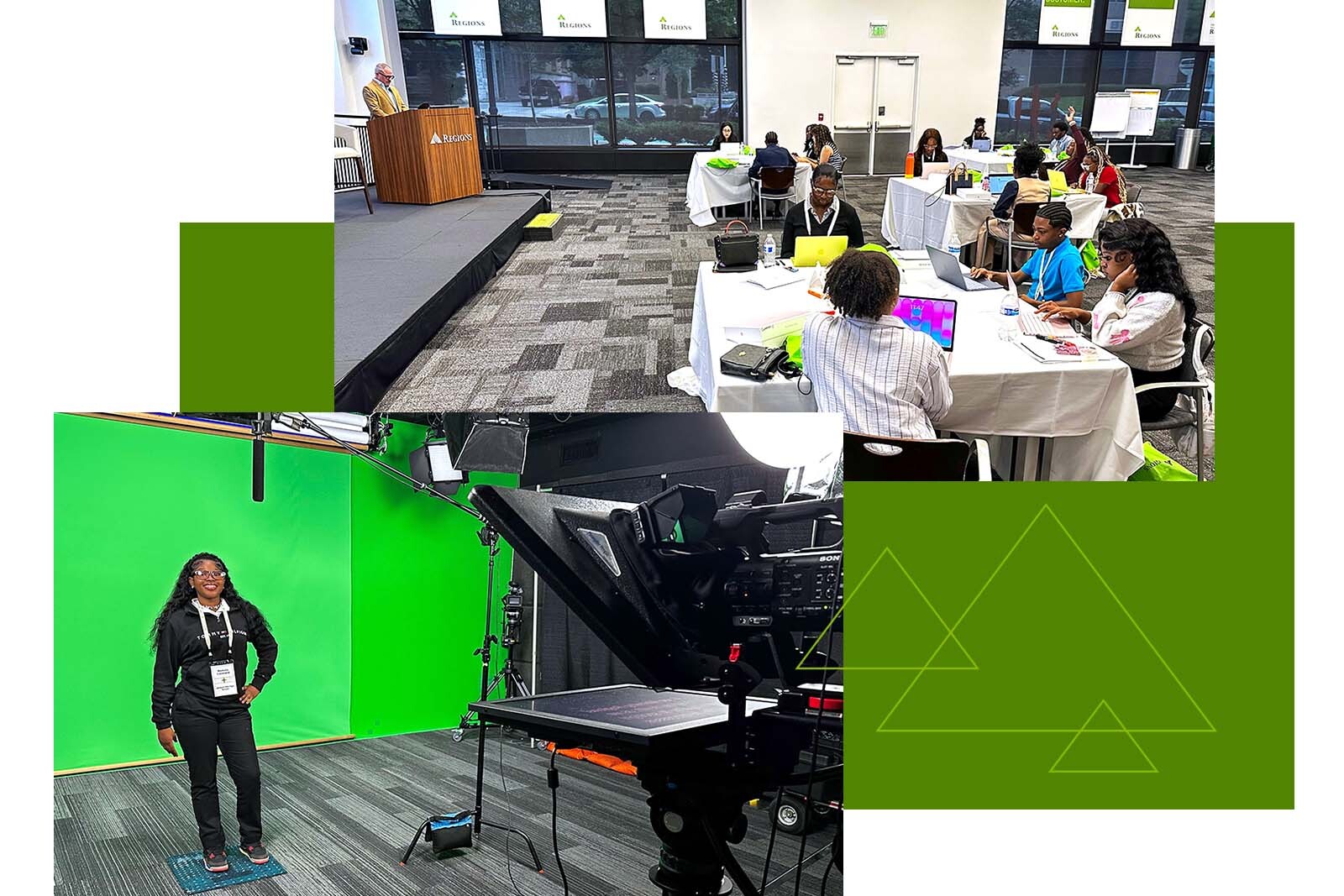
The only thing is it just felt too short, that’s all. Because we had so much fun.
Markeila Cleveland
As Regions evaluates the success of the pilot program and its potential future impact, one measure may be the enthusiasm expressed by students as the week came to a close.
“Being here at Regions has been one of the best experiences of my life,” Cleveland said.
Then she offered perhaps the strongest endorsement of all.
“The only thing is it just felt too short, that’s all. Because we had so much fun.”