Pro Bono Week celebrates the impact of professional skills that are shared on a volunteer basis to strengthen communities. While the term is most often associated with legal services, the spirit of pro bono work extends across many professions.
At Regions, that commitment comes to life through Regions Skills in Service®, a skills-based volunteer program that connects associates with nonprofits and community organizations in need of specialized knowledge and experience. Through structured projects, associates apply their professional skills to help organizations address challenges, strengthen operations and advance their missions.
“Skills-based volunteerism allows us to support nonprofits in a different and often deeper way,” said Gina Sian, head of the Regions Making Life Better Institute®. “These experiences give our associates an opportunity to share their professional knowledge in ways that help organizations grow stronger and serve more people. It’s a meaningful way to create impact while putting our values into action.”
Pro Bono Week is the ideal time to highlight two recent projects that paired Regions associates from the Human Resources division with Birmingham-area nonprofits, providing strategic support in areas ranging from performance management to strategic planning.
These experiences give our associates an opportunity to share their professional knowledge in ways that help organizations grow stronger and serve more people.”
Gina Sian, head of the Regions Making Life Better Institute®
Helping a Nonprofit Prepare for the Future
When The Birmingham Promise, a nonprofit focused on helping local students access education and career opportunities, was preparing for significant organizational changes, Regions associates helped the organization reimagine how it sets goals, evaluates performance and rewards results.
Andrea Carpenter and Jennifer Desmond from the Regions Total Rewards team interviewed leaders and associates, reviewed existing processes and assessed employee feedback, then developed recommendations for a redesigned performance management and incentive framework. Their work included a new goal-setting model aligned with the organization’s strategic priorities, structured coaching and feedback processes, updated performance evaluation tools and a refreshed rating system. Carpenter and Desmond also developed a comprehensive incentive plan, implementation materials and communication resources to support the transition.
Based on feedback from the organization, the project equipped Birmingham Promise with a more structured and consistent approach to goal setting, performance evaluation and employee incentives, helping position the nonprofit for future growth.
“This project exceeded our expectations,” said Samantha Williams, executive director of Birmingham Promise. “Beyond what we thought was possible, they were able to bring to bear all of Regions’ expertise while adapting their recommendations for an organization our size. Truly world-class support on this.”
Beyond what we thought was possible, they were able to bring to bear all of Regions’ expertise while adapting their recommendations for an organization our size. Truly world-class support on this.”
Samantha Williams, executive director of Birmingham Promise
Carpenter and Desmond found the project rewarding and were grateful to support the organization and their important mission.
“It was truly a privilege to work with Birmingham Promise and contribute to such a meaningful organization,” Carpenter said. “Jennifer and I enjoyed partnering with the team and are grateful for the opportunity to support an initiative that helps students achieve their educational and career goals.”
Leadership Development Meets Community Service
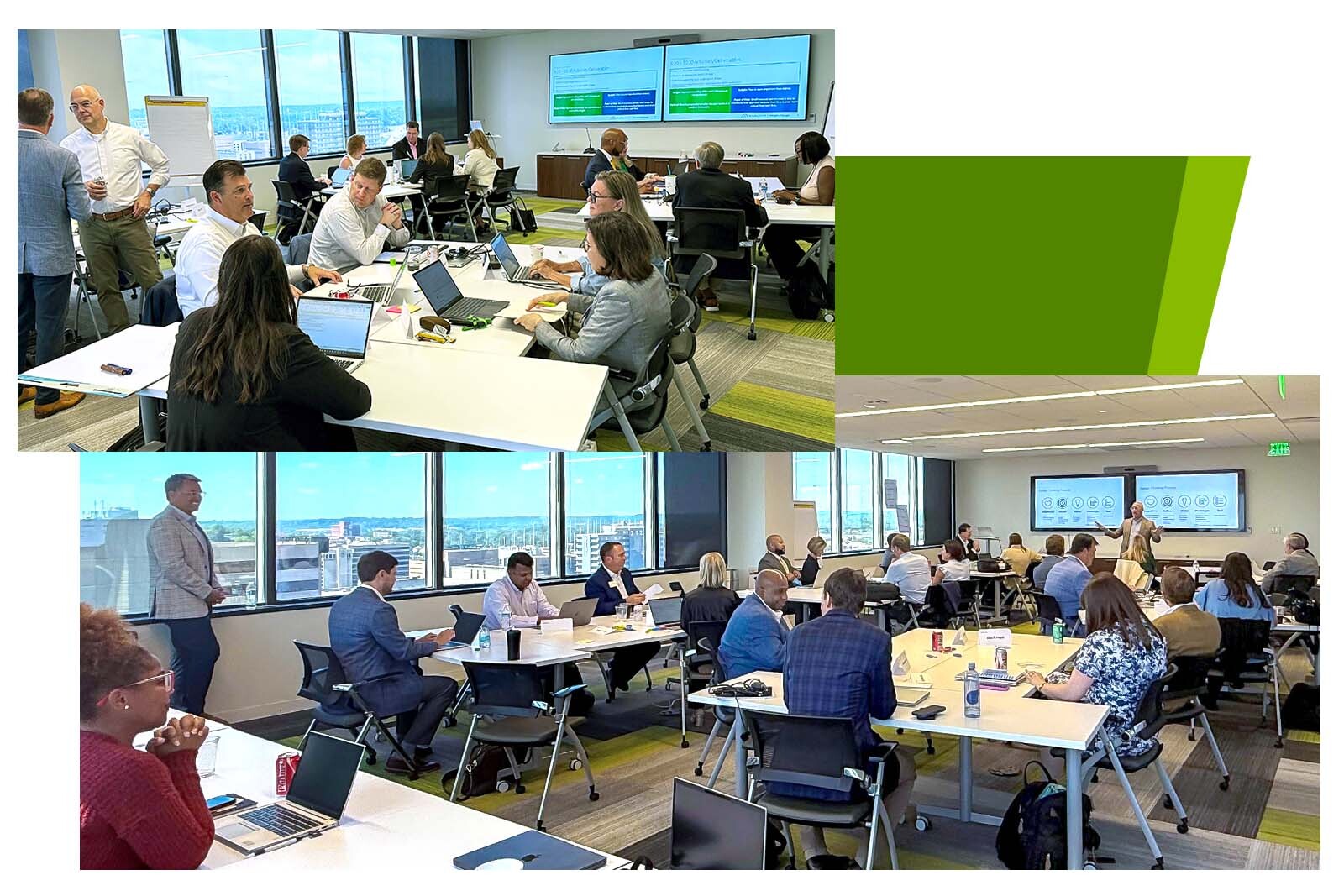
As part of a leadership training program focusing on working through others, empowering transformation and driving innovation, the Regions Learning & Development team worked with Sian to organize a Regions Skills in Service project that applied lessons from the program to support two nonprofits.
The organizations, Girls Inc. and ELI Thrive, each presented a strategic challenge facing their nonprofit. Girl’s Inc. provides mentorship and programs that help prepare girls for success, while ELI Thrive offers coaching and resources to help community members achieve housing stability, employment and other life goals.
Girls Inc. sought fresh perspectives on expanding its year-round programs into rural communities. Similarly, ELI Thrive was exploring opportunities to extend its services beyond the communities it currently serves.
Regions leadership training participants leveraged a recent Design Thinking session to help the organizations address those needs.
Design Thinking is a hands-on problem-solving process that encourages creative solutions by taking measured steps to understand needs, generate ideas, test solutions and drive innovation.
Working in teams, participants interviewed stakeholders, conducted research, analyzed information and reframed the challenges before developing recommendations. For Girls Inc., the team identified opportunities to expand the organization’s reach by focusing resources on its most impactful programs and exploring additional support for program analysis and long-term planning.
“Working with Girls Inc. highlighted how thoughtful strategy can help organizations achieve outsized impact with limited resources,” said Caitlin Barre, head of Compliance and Operational Risk Oversight for Technology, Data and Third-Party Risk Management. “By bringing together different perspectives and using the Design Thinking process, we were able to ask better questions, explore new possibilities and develop practical recommendations to help Girls Inc. maximize its impact and extend its reach.”
For ELI Thrive, participants proposed several approaches to broaden the organization’s impact, including mobile service delivery, strategies to strengthen coach recruitment and retention, and a pilot partnership model that would bring ELI Thrive’s services directly to employees through local employers. The organizations also received implementation ideas and next steps to help move the projects forward.
“This project gave our Regions leaders a chance to practice critical leadership skills in a real-world setting,” said Kelli Olson, Learning and Development team lead. “The leaders offered valuable insights and solutions to our community partners, to help the nonprofits expand their services.”
One of the things that makes skills-based volunteerism so powerful is that it creates value for everyone involved.”
Gina Sian
That dual impact is one of the reasons skills-based volunteerism continues to be an important part of Regions’ community engagement efforts.
“One of the things that makes skills-based volunteerism so powerful is that it creates value for everyone involved,” said Gina Sian. “Associates have an opportunity to apply and strengthen their skills in meaningful ways, while nonprofit organizations gain fresh perspectives and additional support. These partnerships show how professional development and community impact can go hand in hand.”