Sitting in her doctor’s office, 11-year-old Emily Turner was struggling to confront a future she never imagined.
A cancer diagnosis. Then, the unexpected amputation of her leg.
“What am I going to do? I can’t do anything,” she recalled. “I was a little bit angry at the world in those moments.”
Days later, Turner’s doctor prescribed something unusual: go to camp.
Turner was skeptical.
“What are you talking about? I’d never been to camp before. I had no experience with the camp world whatsoever.”
But this wasn’t just any camp.
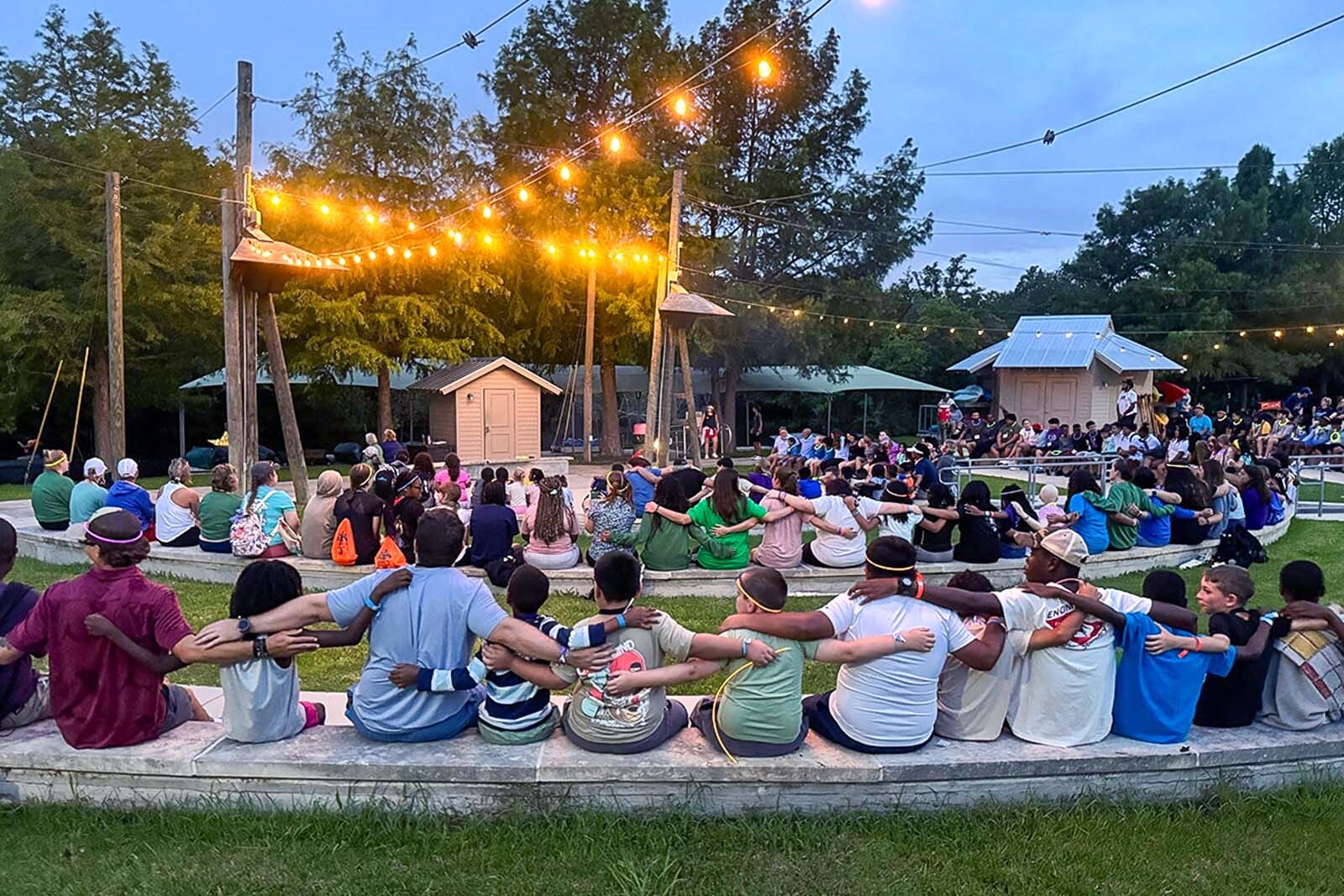
This was Camp For All in Burton, Texas, a place where children and adults with challenging illnesses, disabilities or special needs can just be campers.
For nearly three decades, Camp has created life-changing experiences for more than 200,000 campers. It’s also a mission Regions Bank in Houston is proud to support.
A Place to Be a Camper
Founded by two physicians, Camp For All was built around a simple idea: creating a place where children and adults with challenging illnesses, disabilities or special needs can simply be campers. Camp For All in Burton, Texas, operates year-round on a 200-plus-acre campus and has served more than 200,000 campers since 1998.
Camp For All’s second barrier-free Camp in Chappell Hill will open next summer. Regions helped launch the expansion with a $50,000 donation.
Packing Her Duffel Bag, Disgruntledly
Encouraged by nurses from her treatment team who had spent summers at Camp For All, Turner headed about 90 miles northwest of Houston. Her brother, Jacob, joined her.
“I kind of disgruntledly agreed to go,” Turner said. “I really didn’t know what to expect.”
What she found was freedom.
“Everyone who goes through the gates at Camp For All feels it the second you arrive,” she said. “It’s a moment of, ‘Wow, this is special. This is what the rest of the world should be like.’”
No stares. No questions.
“I wasn’t having to explain why I couldn’t wear my prosthetic because it was being refitted,” Turner said. “I could say I was doing chemotherapy a week before this, and someone would respond, ‘Oh yeah, I was doing that two weeks ago.’”
And the impact of Camp For All extended beyond Emily.
“My parents were so worried,” Turner said. “But then I got to Camp and never called home. This was a community we needed and didn’t have back at home.”
Discovering What’s Possible
In the days after her diagnosis, Turner was convinced her world would become much smaller.
“I kind of had this mindset of, ‘I’m going to be in a wheelchair, I’m never going to be able to play sports again,’” she said.
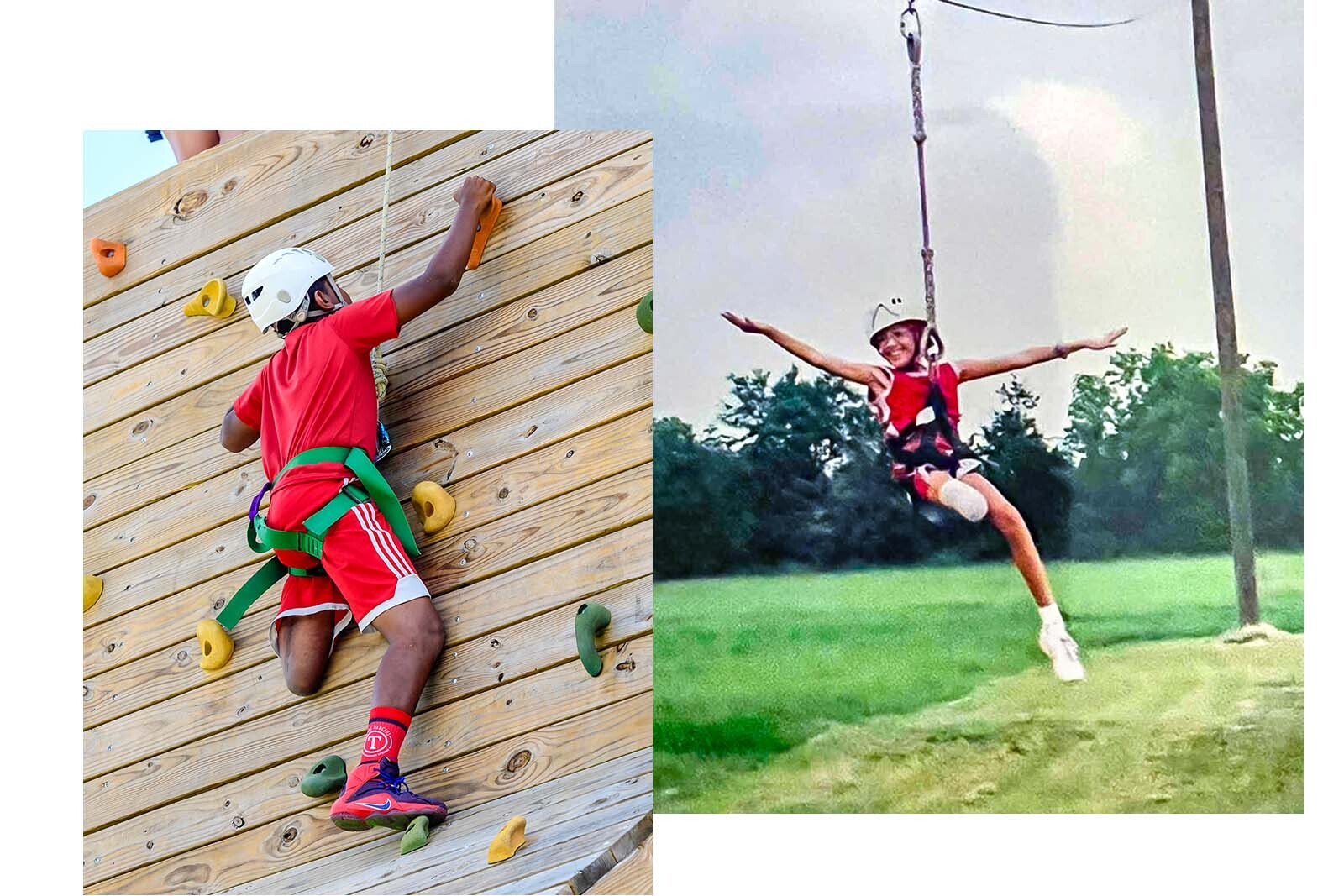
Instead, she found campers dancing on crutches, climbing rope walls and doing things others assumed were impossible.
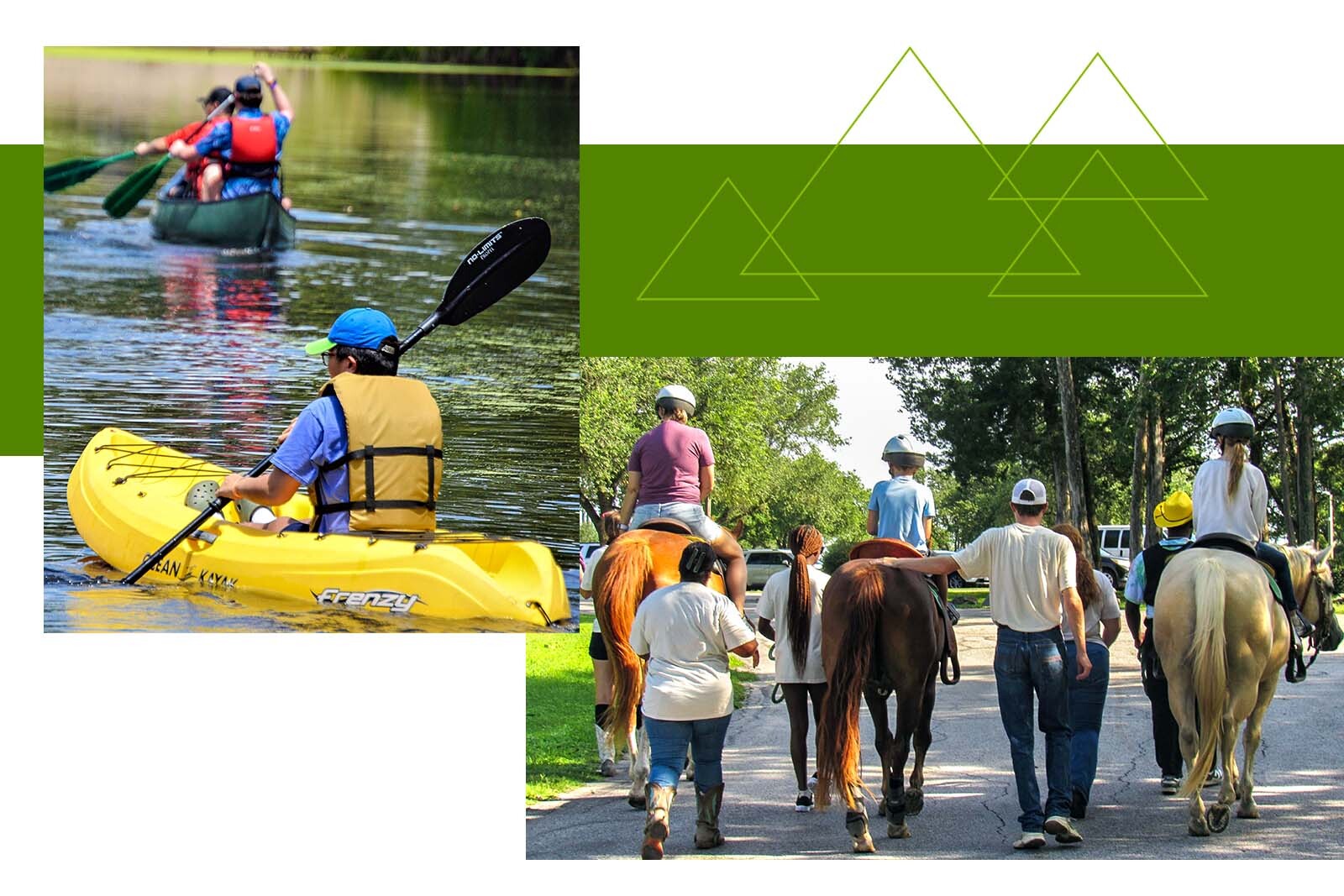
Ziplining. Horseback riding. Swimming.
Turner did them all.
“It just opened up my world completely,” Turner said.
Possibility replaced doubt.
“It took a little bit for me to get my footing under me and try all the things,” she said. “But once I did, I thought, ‘Oh, I want to experience it all again next year. I’ve got to come back.’ It was automatic for me.”
It really gave me what I needed at that time in my treatment: to know that I could do this.”
Emily Turner
Going home felt daunting.
“Leaving was a little disappointing,” she said. “I not only took a break from treatment, but I also was able to spend time with my brother in a way we really didn’t have in the outside world because I was in the hospital all the time.”
But Camp had already revealed something Turner couldn’t see in that doctor’s office weeks earlier: possibility.
“My parents signed me up for horseback riding lessons literally when I got back,” she said. “Oh, this is something she can do. This is great.”
Turner returned home changed.
“It gave me the motivation to try out for cheerleading, which I did, and to go skiing if I wanted to ski,” she said. “It really gave me what I needed at that time in my treatment: to know that I could do this.”
Lighting a Fire
Turner returned to Camp For All year after year, eventually going from camper to counselor.
“That lit a fire under me,” she said. “I want to be able to use everything I’ve gone through to help people in some way.”
Her brother, Jacob, later joined the Camp For All staff as a counselor, program instructor and supervisor before moving to another camp. He also met his wife there.
“It changed my whole family’s life,” Turner said.
Camp also shaped her sense of purpose.
“I’ve gotten a second, third, fourth lease on life,” she explained. “It’s given me a perspective that I could never go back. I want to be able to put my footprint on the world and be able to use it for good.”
It’s given me a perspective that I could never go back. I want to be able to put my footprint on the world and be able to use it for good.”
Emily Turner
So when an opportunity arose to return to Camp For All, Turner didn’t hesitate. In May, she joined the nonprofit she credits with changing the trajectory of her life as a recruitment specialist. Turner’s return comes at a pivotal moment with Camp For All’s expansion, expected to double the number of campers and families the organization can serve.
Looking back, Camp For All meant far more than activities and memories.
“My mom told me I learned to fly before I learned to walk,” Turner said. “It’s so true. I totally found my wings at Camp.”