Technology is moving at breakneck speed, reshaping how organizations operate, make decisions and serve their clients. Advances in artificial intelligence, cybersecurity and digital tools are creating new opportunities for efficiency and growth, but they also introduce challenges, including rising costs, increased security risks and the need for specialized expertise.
For nonprofits, those challenges can be especially difficult to navigate. Many organizations operate with lean budgets and small staffs, often without dedicated technology teams to help evaluate new tools, strengthen cybersecurity practices or build long-term technology strategies.
Tiffany Kirk, executive director of Project Restart in Atlanta, a nonprofit that supports system-impacted individuals through education, employment and entrepreneurship opportunities, said nonprofit leaders often find themselves so busy working in the nonprofit that leaders rarely have time to work on it.
Our associates have incredible knowledge, and the Skills in Service program creates opportunities to apply those capabilities in ways that strengthen nonprofits and the communities they serve. Gina Sian, head of the Regions Making Life Better Institute
“It’s critical to take the time to work on your company, on your nonprofit, because you can’t grow, you can’t scale, you can’t do anything if your operations are not solid,” Kirk said.
That’s where Regions Skills in Service program comes in. Part of the bank’s Making Life Better Institute, the program connects Regions associates with nonprofits seeking guidance in areas where professional skill and experience can make a meaningful difference.
“Our associates have incredible knowledge, and the Skills in Service program creates opportunities to apply those capabilities in ways that strengthen nonprofits and the communities they serve,” said Gina Sian, head of the Regions Making Life Better Institute. “When we help organizations build stronger technology foundations, we’re helping them focus more of their time and resources on fulfilling their missions.”
This summer, Regions collaborated with Apparo, a nonprofit that helps organizations strengthen their technology capabilities through skilled volunteer support and strategic resources. Through a 10-week virtual cohort, nine Regions volunteers were paired with community partners across the Regions footprint. Participating nonprofits specialize in small business development and entrepreneurship support. The cohorts were assembled to address technology challenges, strengthen cybersecurity practices, explore artificial intelligence and build plans for future growth.
In addition to one-on-one mentoring, nonprofit participants gained access to workshops led by Regions leaders on four key topics:
- Technology Essentials by Chief Technology Officer Melissa Dabb
- Cybersecurity Essentials by Chief Information Security Officer Ivana Cojbasic
- AI Essentials by Data Products Manager Sumitha Natarajan
- Digital Marketing Essentials by Digital Experience Manager Todd Keith
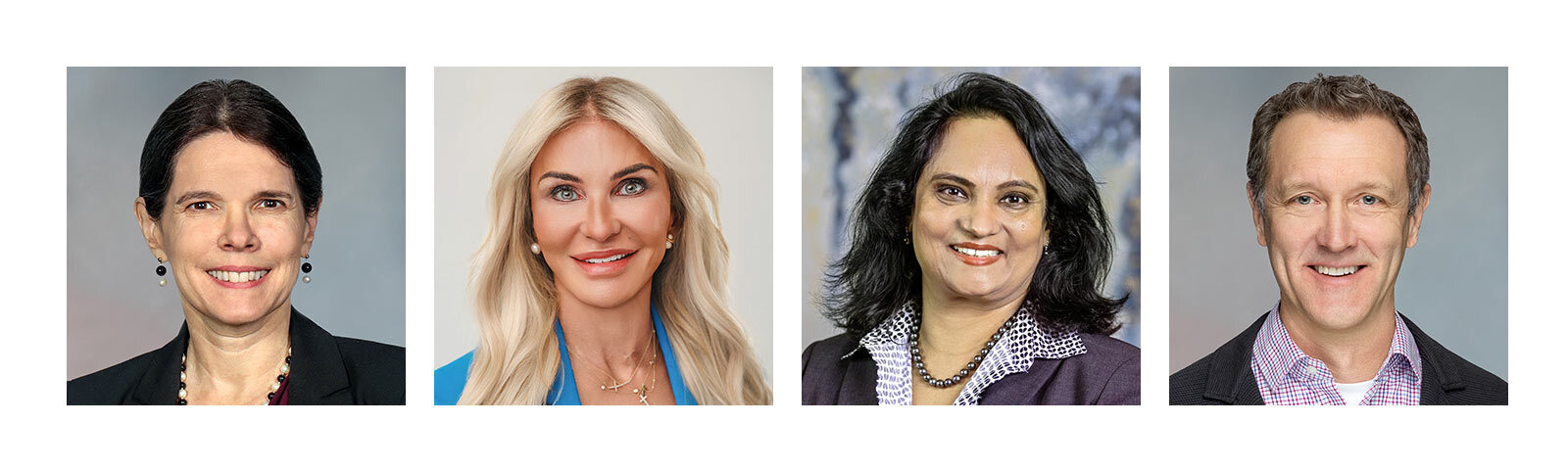 Melissa Dabb, Ivana Cojbasic, Sumitha Natarajan and Todd Keith
According to Apparo, Regions volunteers contributed 146 hours of service through the cohort, creating an estimated $134,640 in value for participating nonprofits.
The result was more than technology advice. Nonprofits gained practical solutions, new resources and strategic guidance tailored to their needs, while Regions associates had the opportunity to apply the skills they use every day to help organizations expand their impact and better serve their communities.
Solving Practical Technology Challenges
For Shannon Powers, a Technology Field Services technician in Jackson, Tenn., the work quickly became more than a discussion about technology.
Working with Community Enterprise Investments Inc. (CEII), a Pensacola, Fla., organization focused on small business development and affordable housing, Powers helped address technology issues ranging from aging computer equipment to tenant payment processes and cybersecurity planning. What began as a discussion about cybersecurity led to a deeper look at the nonprofit’s technology infrastructure and future needs.
“They knew they were here and wanted to get there,” Powers said. “They just didn’t know the best path forward.”
Powers helped the organization evaluate options for transitioning from Windows 10 to Windows 11 and think strategically about future hardware investments, focusing not only on immediate solutions but long-term sustainability.
They knew they were here and wanted to get there. They just didn’t know the best path forward. Shannon Powers, Technology Field Services technician in Jackson, Tenn.
“Everything that we identified as issues, Shannon provided us with next steps,” said Grover Brown, director of Business Development at CEII. “Not only did he provide best practices, he also showed us how to get it done.”
Energized by CEII’s mission, Powers said the experience was about more than solving immediate technology challenges. It was an opportunity to help the organization build a stronger foundation for the future.
“We were able to have a discussion about, going forward, what this means,” Powers said. “Let’s get them set up for future wins.”
Strengthening Security and AI Readiness
According to Chellee Roberts, a Technology Services Help Desk technician, the experience demonstrated how knowledge gained through her career at Regions could directly support nonprofit missions.
Paired with Miami-based nonprofit The Allapattah Collaborative CDC, Roberts provided guidance on cybersecurity, password management, mobile device security and responsible AI use.
“I was able to offer some practical everyday advice, even something as simple as fixing a password,” Roberts said.
It was very rewarding, being able to use my skills, things I’ve learned here at Regions, to help another organization be more successful at what they’re doing and to safeguard against internet threats. Chellee Roberts, Technology Services Help Desk technician
For Roberts, the opportunity reinforced the value of sharing workforce skills with organizations that are working to make a difference in their communities. She said helping the nonprofit strengthen its technology practices and better protect its systems was both meaningful and rewarding.
“It was very rewarding, being able to use my skills, things I’ve learned here at Regions, to help another organization be more successful at what they’re doing and to safeguard against internet threats,” Roberts said.
Beyond Technology Solutions
Many volunteers said the relationships they built with nonprofit leaders were among the most rewarding aspects of the program. For Birmingham-based Cyber Security Manager Herbie Handal, his experience working with the Mid-South Business Continuum provided an opportunity to collaborate with nonprofit leaders while gaining a deeper understanding of the challenges organizations face as they serve their communities.
The Mid-South Business Continuum supports Memphis-area small businesses and entrepreneurs by providing resources, training and connections that help them grow, create jobs and contribute to stronger local economies.
“I definitely admire the people working in these organizations,” Handal said. “It was great to get to know a few of them a little bit better.”
Natalie Robinson, vice president and director of Communications & Marketing for Mid-South Business Continuum, said the mentor relationship was the most valuable aspect of the experience.
I definitely admire the people working in these organizations. It was great to get to know a few of them a little bit better. Herbie Handal, Cyber Security Manager
“You’re almost getting a free consultant to give you feedback about your organization, specifically for IT and the technology resources to support your organization,” Robinson said. She added that the nonprofit plans to incorporate new resources and policies around AI governance, social media use and the handling of sensitive information, based on discussions during the cohort.
More than anything, Handal said the experience reinforced the value of using professional skills to support organizations making a difference in their communities.
“One of the most rewarding parts of the experience was realizing that the work I do every day can help these organizations that are in turn helping others,” he said.
Skills in Service Connections
Through the Apparo cohort, Regions associates were paired with nonprofits across the bank’s footprint that help entrepreneurs and small businesses start, grow and succeed. Congratulations to these associates and organizations who are making a real difference.
- Shannon Powers: Community Enterprise Investments Inc., Pensacola
- Chellee Roberts: The Allapattah Collaborative CDC, Miami
- Herbie Handal: Mid-South Business Continuum, Memphis
- Keith Cain: Project Restart, Atlanta
- Haleigh Beard: Conexión Américas, Nashville
- Tom Butler: Entrepreneurship Center for Growth and Excellence, Birmingham
- Wesley Jones: Main Street Alabama, Birmingham
- Greg Bucko: Pinellas County Urban League, St. Petersburg
- Kasandra Smith: Project Prosper, Inc., Tampa Bay