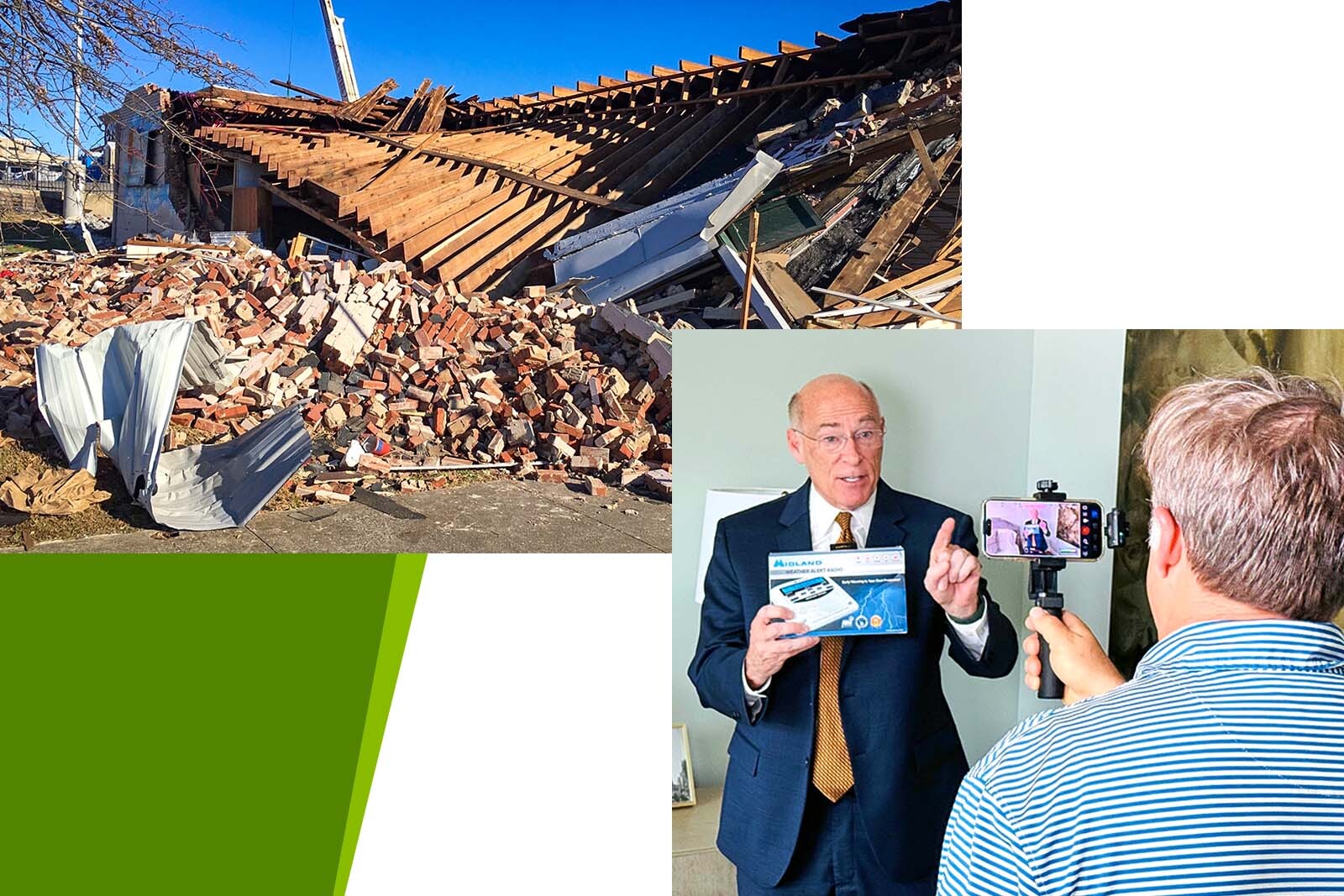
The sun is shining outside, but dark clouds are on the horizon – hinting at changes to come.
Inside, James Spann is doing what he does best: helping people prepare for tornadoes, hurricanes and other storms affecting the Southeast, the Gulf Coast and beyond.
“This campaign goes a tremendous way in helping keep people safe,” said Spann, founder of the Alabama Weather Network and broadcast meteorology veteran of nearly 50 years.
Spann was already well-established when one of the worst storms in American history hit. The memory continues to fuel his passion for public safety.
“Why do I do this? Too many people died on my watch 15 years ago,” he said. “April 27, 2011, is a day we’ll never forget. That’s why we must do a better job of getting the word out when storms approach.”
The 2011 Super Outbreak remains the largest and costliest tornado outbreak in U.S. history. Over several days, more than 175 destructive tornadoes struck Alabama, Mississippi and Tennessee, with additional storms reported from Louisiana to New York.
That’s why Spann and the Alabama Weather Network teamed up with Regions to share practical steps for building a safety plan. This latest enhancement of Spann’s collaboration with Regions comes during National Homeownership Month. (If you’ve recently moved to a new home, do you know where to go when severe weather is on the way?)
But it’s important to note: This is not just about National Homeownership Month. Because severe weather can strike every month of the year.
Bottom line: Severe weather preparedness saves lives.
Step 1: Get Advance Warning
Before storms arrive, make sure you have reliable alerts.
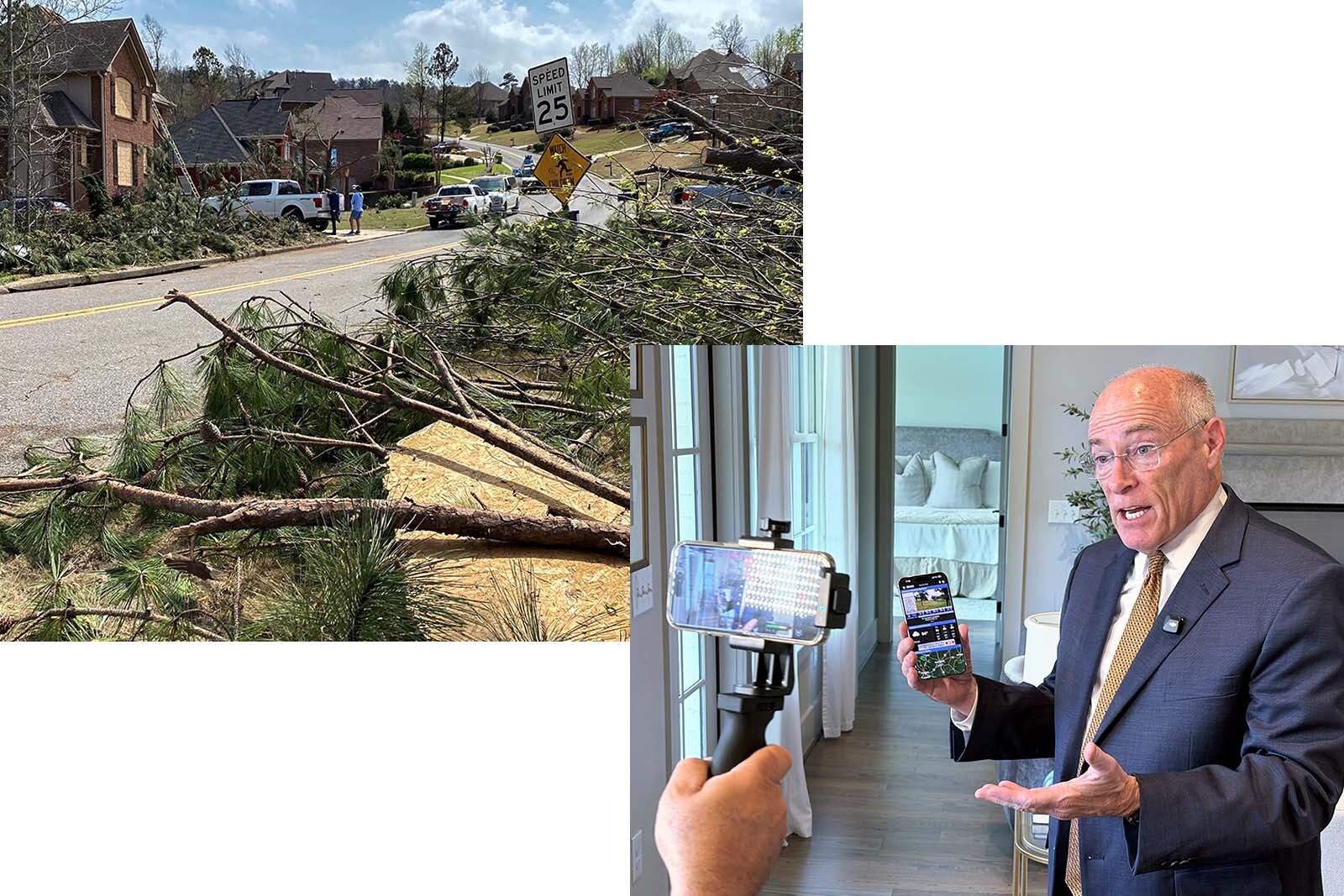
A NOAA weather radio is critical, Spann said. When severe weather threatens, the device issues automatic warnings.
“This is the baseline — a NOAA weather radio,” Spann said. “Every home needs one.”
You should also install a trusted weather app on your smartphone. Regions helps sponsor the Alabama Weather Network app, which delivers real-time alerts directly to users at no cost.
Step 2: Seek Shelter Immediately
When a warning is issued, act without delay.
In a home, the safest place is on the lowest floor in a small interior room.
“You want to put as many walls between you and the storm as possible,” Spann added.
If you have an underground basement, that’s great. (Remember to stay away from windows or doors if it’s a daylight basement.) And Spann noted you don’t have to have a basement to survive most tornadoes. A lot of people are saved by taking shelter in a downstairs closet or a bathroom – anywhere in the center of the house away from windows and away from walls that face the outside.
Also remember:
- Mobile homes offer great, affordable housing. But they are not safe for high winds, tornadoes and similar threats.
- Go ahead and arrange where you can take shelter if you live in a mobile home. For example: Find out where the nearest community shelter is. Make arrangements with friends or relatives in a site-built home. Or maybe determine where there’s a 24-hour business in a site-built structure that will let you take shelter.
- Planning is key. If you wait to make a plan until storms are bearing down, it’s often too late.
- Make sure your entire family knows your plan.
Step 3: Prepare a Readiness Kit
Have essential items ready before a storm hits, including:
- Helmets for each family member.
- Hard-soled shoes to navigate debris.
- A portable air horn to signal rescuers.
- A phone charger to maintain communication during outages.
“A few simple preparedness actions now can make a big difference – and could ultimately save your life the next time severe weather rolls in,” Spann said.