Artificial intelligence is changing how we work, but according to Noelle Russell, who has spent much of her career helping organizations adopt AI and emerging technologies, the most important factor in its success is still people.
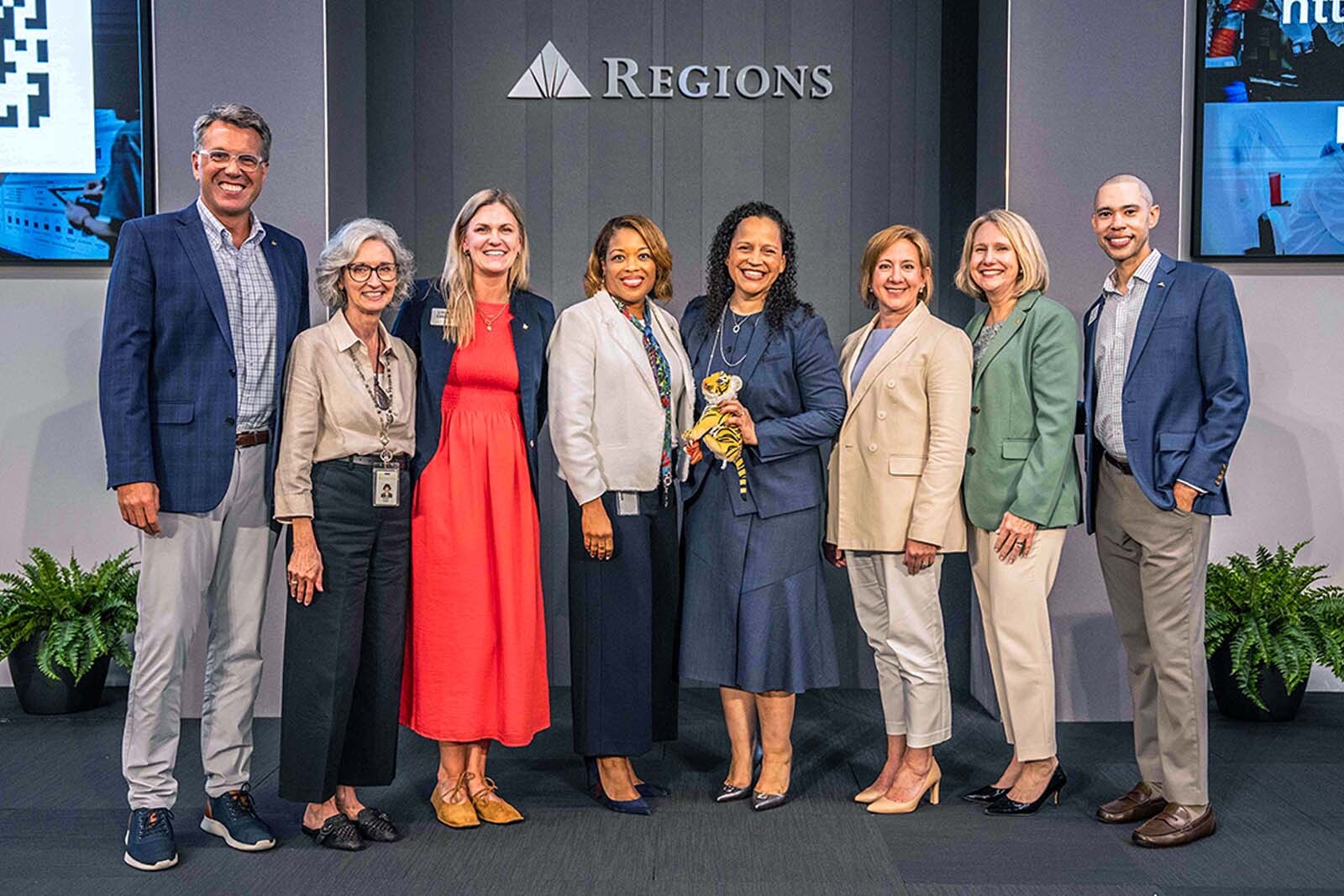
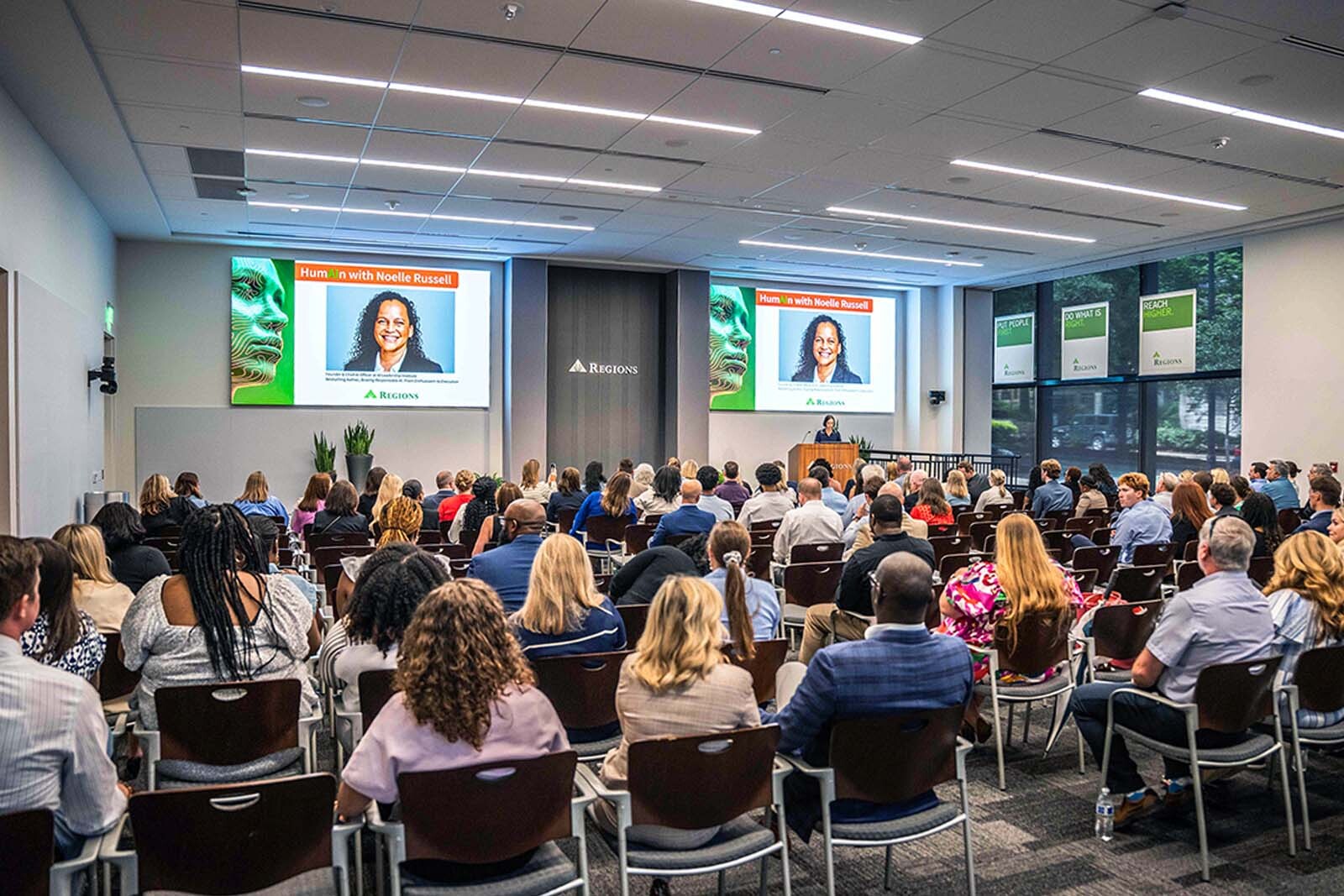
That message resonated with Regions associates who recently gathered in Birmingham and virtually to hear her speak on the future of AI and the role people play in shaping it.
The HumAIN session explored how AI can support creativity, productivity and accessibility while emphasizing the importance of using the technology responsibly.
Rather than centering her discussion on technology alone, Russell encouraged associates to think about the human decisions that shape how AI is built, adopted and used. She emphasized that while AI can help organizations work more efficiently, its value ultimately depends on the people guiding it.
“It’s not about what technology can do,” the founder of the AI Leadership Institute and former technology leader at Amazon Alexa and Microsoft shared with associates. “It’s about what you can do with it.”
It’s not about what technology can do. It’s about what you can do with it.
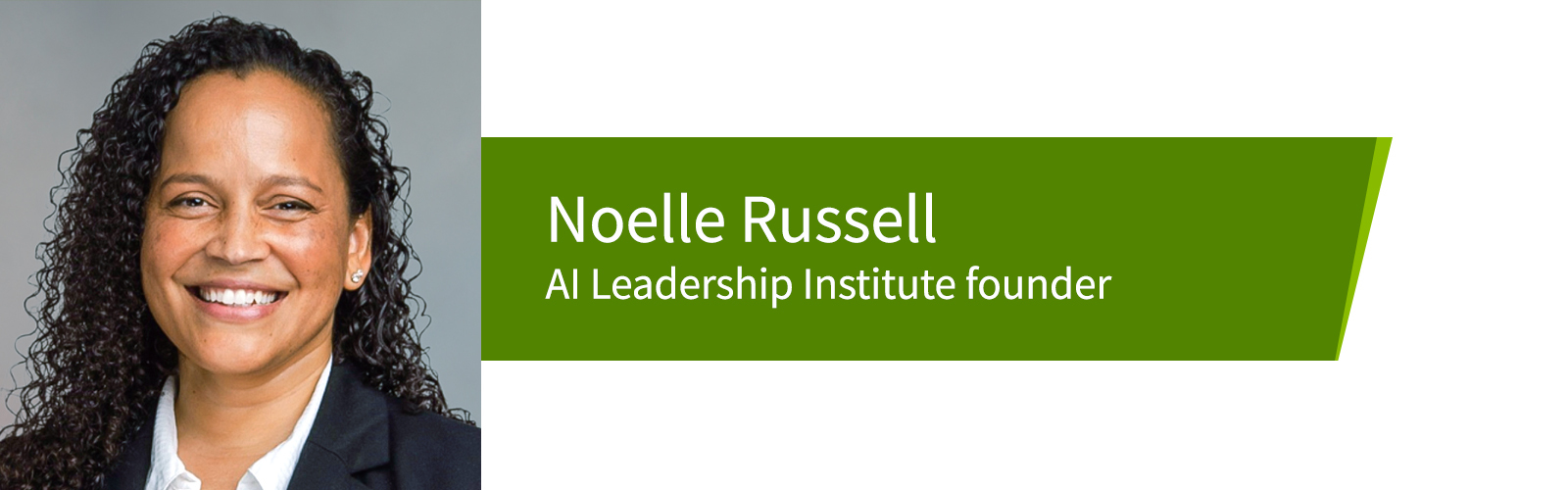
Accessibility Benefits Everyone
Russell shared personal stories from her career and family life that illustrated AI’s potential to make everyday tasks easier, expand accessibility, and create better experiences for those using it.
As a mother of six, including a son with Down syndrome and autism, she described how advances in technology have supported greater independence in her own family.
“The cool thing about building accessible technology is that when you focus on accessibility, everyone benefits,” she said.
Russell’s perspective is also shaped by her experience caring for her father after a traumatic brain injury. She described how voice-enabled technology has helped him live more independently by answering questions and assisting with daily tasks.
“That’s why I’m so optimistic about this technology,” she said. “I see it through a totally different lens.”
Asking the Right Questions
One of the session’s most memorable themes was Russell’s description of AI as a “baby tiger.”
Just as a baby tiger may seem small and manageable at first, she explained, AI systems can grow quickly in capability and complexity, making it important to actively guide and monitor them.
“AI isn’t like software that you buy off the shelf and deploy,” she said. “AI is a living, breathing system that grows. And if you are not watching it, it will grow in a direction that you did not decide.”
Using the baby tiger analogy, she encouraged associates to ask thoughtful questions before adopting or building AI solutions.
“How big are you going to be? What are you going to eat? Where do you get your data?” Russell asked, highlighting the types of questions leaders should consider when evaluating AI systems.
Russell also challenged attendees to actively engage with AI tools instead of viewing them as something being developed for them behind the scenes.
She stressed that successful AI programs require trust, adoption and ongoing feedback from the people using them. Technology teams can build powerful tools, she explained, but those tools only become valuable when employees help refine and improve them.
“It can only help you so much without your feedback,” Russell said.
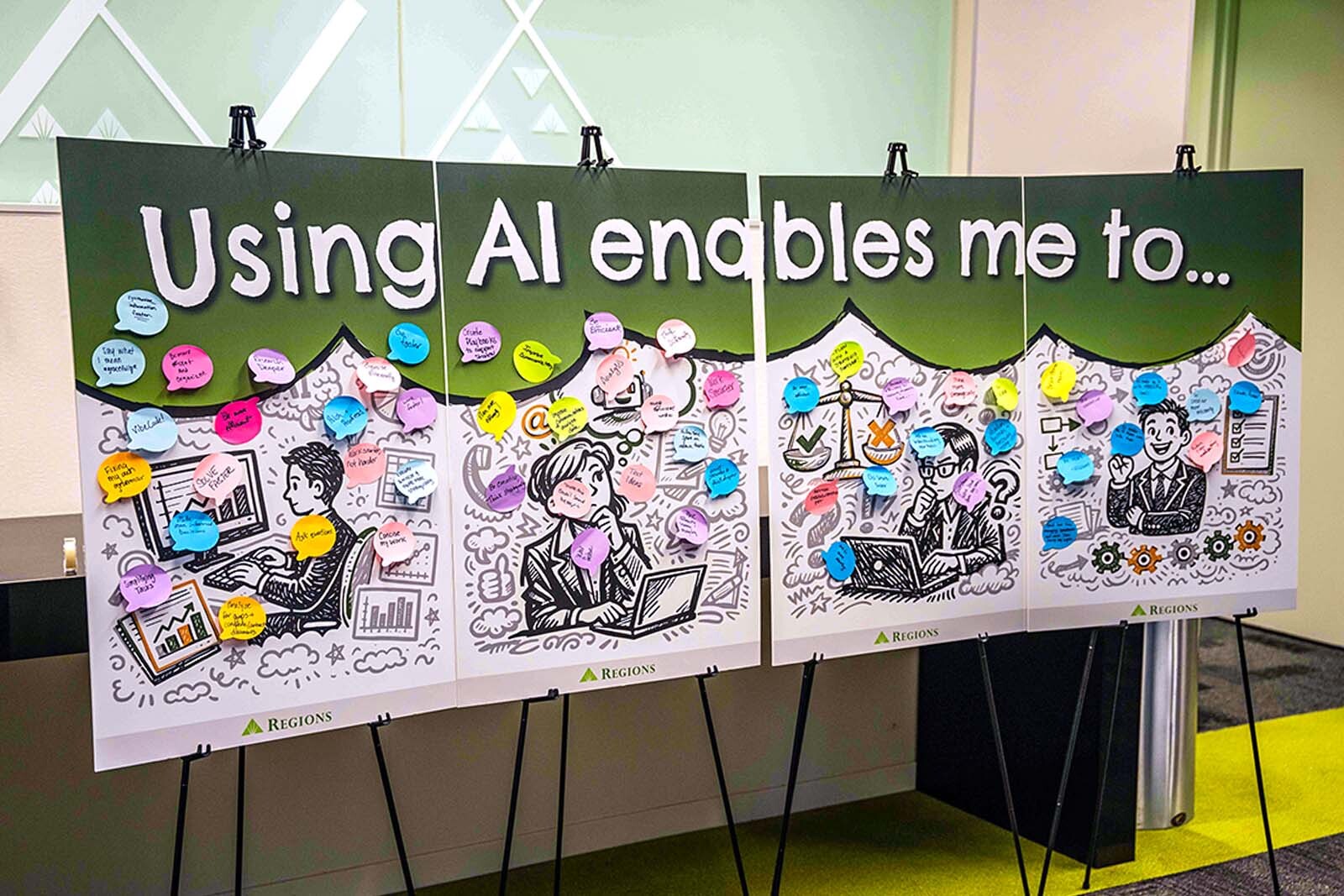
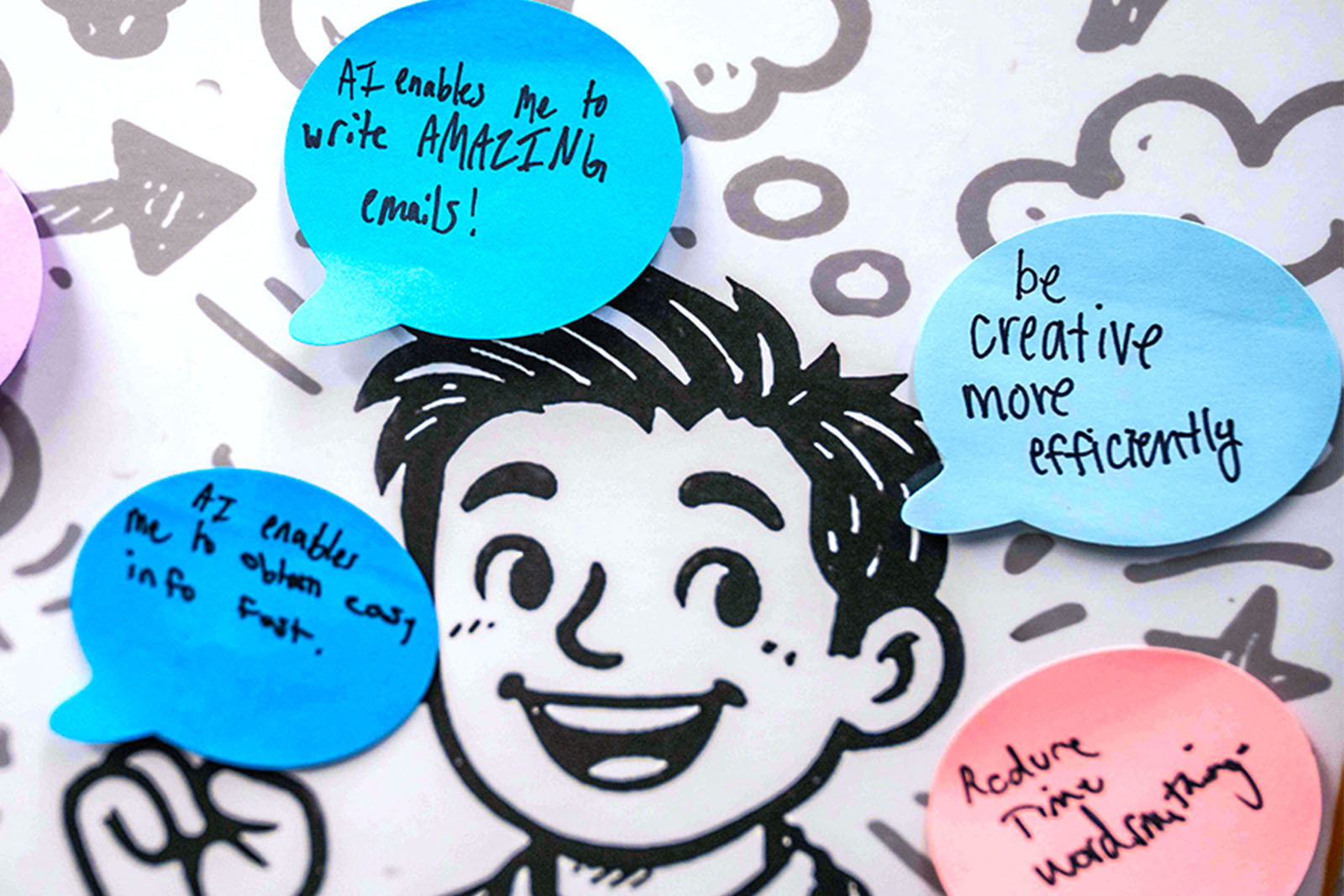
She encouraged associates to see AI not simply as a way to save time, but as a tool that can help solve problems, eliminate frustrating work and create space for new ideas.
Reflecting on the event, Seanna McGough, head of Learning & Development, said Russell’s message reinforced the importance of helping associates build confidence with emerging technologies.
Russell’s message reinforced an important truth: AI is only as powerful as the people using it.
Seanna McGough, head of Learning & Development
“Russell’s message reinforced an important truth: AI is only as powerful as the people using it. By helping associates learn, experiment and build confidence with these tools, we’re creating opportunities to work smarter, solve problems in new ways and deliver even greater value for our customers,” she said.
As the event concluded, Russell left associates with an optimistic view of what’s possible when people and technology work together.
“We are in a season of using technology to massively amplify our success,” she said. “You have more power at your fingertips than entire generations that came before you.”
For associates attending the event, Russell’s message was less about the technology itself and more about the choices people make when using it. Whether through feedback, experimentation or responsible adoption, she encouraged associates to play an active role in shaping how AI evolves.
If AI’s greatest strength is still people, she said, the future will be defined by what people choose to do with it.